

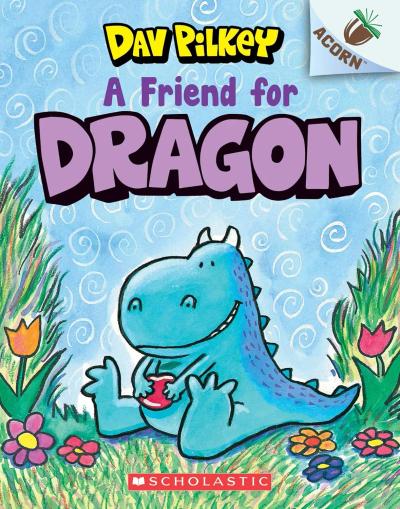
On its face, A Friend for Dragon seems like a simple story of loneliness, friendship, and whimsy. But thereโs a quiet ache threaded through its heart. Dragonโs desire for companionship feels so big, so vulnerable, that when he mistakes an apple for a friend, it doesnโt feel silly, it feels sincere. This story isnโt just about friendship; itโs about how we cope with loneliness, how we create connections in unexpected places, and how grief (yes, grief) can hit even the softest, roundest hearts.
What sets this story apart is how Dav Pilkey walks the tightrope between humor and heartache. Itโs a book that makes children laugh out loud but also feel something new. For many young readers, this might be their first experience with loss in a story, and Pilkey handles it with gentle hands.
The illustrations may seem simple at first glance with bold outlines, flat colors, and playful shapes. But look closer. Notice the subtle shifts in Dragonโs eyes as his emotions change. Watch the way his body droops just a little when heโs sad. The magic of Pilkeyโs visual storytelling is in its restraint. Every detail works hard to tell the emotional truth of the moment.
When Dragon buries his โfriend,โ the rain is pouring, and thereโs a quiet stillness to the page that echoes the weight of loss. Itโs an unspoken, but deeply felt, visual cue.
A Friend for Dragon teaches something most picture books avoid: sometimes, you lose things you love, and itโs okay to be sad about it. While there is no magical resurrection of the apple, a new apple tree grows where Dragon buried his old friend, bringing him happiness. No โaha!โ lesson spelled out in bold letters. Just Dragon, living with his feelings, and finding a postive way to move forward.
In a world where childrenโs books often push happiness and problem-solving as the ultimate goals, A Friend for Dragon says something different:
Feelings are big. Loss is real. And sometimes, you can only move forward one small step at a time.
This book is perfect for:
- Kids who love silly stories but can handle a little emotional depth.
- Children who are learning about friendship and the complexity of feelings.
- Adults who want to introduce ideas of empathy and compassion in a gentle, accessible way.
Itโs also a brilliant choice for children who are struggling with transitions, separation, or loss since the โgoodbyeโ in this book is quiet but profound.
Questions to ask while reading:
- What do you think makes a good friend?
- How do you think Dragon felt when he thought the apple was talking to him?
- Have you ever felt lonely like Dragon? What did you do?